
If you’ve ever compared business and personal car leasing quotes, you’ve probably noticed something: business lease deals often work out significantly cheaper. It’s not a mistake, and it’s not just clever marketing. There are genuine financial advantages to leasing through a business rather than as a private individual.
But why exactly is this the case? And more importantly, could you benefit from these savings? Let’s break down the numbers and explain why business car leasing comes out cheaper almost every time.
The VAT Advantage
This is the big one. The single most significant reason business leasing is cheaper comes down to VAT.
When you lease a car personally, you pay VAT on the full cost – and there’s no way to get any of it back. It’s simply part of your monthly payment, bundled in and gone.
But, when you lease through a VAT-registered business, you can reclaim a portion of that VAT. Here’s how it works:
For mixed-use vehicles (business and personal use)
You can reclaim 50% of the VAT on your lease payments. HMRC assumes the vehicle will be split roughly evenly between business and personal journeys, so they allow you to claim back half.
For business-only vehicles
If the car is used exclusively for business purposes – such as a pool car that stays on company premises overnight and at weekends – you can reclaim 100% of the VAT.
Example: Let’s say your monthly lease payment is £300 plus £60 VAT, totalling £360.
- Personal lease: You pay £360. End of story.
- Business lease (50% VAT reclaim): You effectively pay £330 after reclaiming £30 back.
- Business lease (100% VAT reclaim): You effectively pay £300 after reclaiming the full £60.
That’s a saving of £30-£60 per month, or £360-£720 per year, just on VAT alone. Over a three-year lease, that’s potentially over £2,000 in your pocket.

Corporation Tax Relief
VAT isn’t the only tax benefit. Businesses can also offset their lease payments against their corporation tax bill, reducing the company’s taxable profit.
For low-emission vehicles (50g/km CO₂ or less)
You can claim 100% of the lease cost as a tax-deductible business expense. This includes all fully electric vehicles and some plug-in hybrids.
For higher-emission vehicles (over 50g/km CO₂)
You can claim 85% of the lease cost against your corporation tax. The remaining 15% is disallowed.
For vans
Regardless of emissions, you can claim 100% of the cost.
If your company pays corporation tax at 25% (the current rate for larger businesses), this means you’re effectively getting 25% of your allowable lease payments back through reduced tax liability. Even at the 19% rate for smaller companies, it’s still a considerable saving.
Self-employed individuals and sole traders can also offset lease costs against their annual tax bill, though the exact treatment depends on your specific circumstances.
Lower Benefit-in-Kind Tax for Electric Vehicles
If you’re providing a company car that can be used for personal journeys, there’s a trade-off: you’ll need to pay Benefit-in-Kind (BiK) tax on the vehicle.
BiK is essentially a tax on the “perk” of having a company car for personal use. The amount you pay depends on three things:
- The car’s P11D value (list price including options)
- Its CO₂ emissions
- Your personal income tax rate
Here’s where electric vehicles become absolute game-changers. Fully electric cars currently attract just 3% BiK tax for the 2025/26 tax year (rising to 4% from April 2026), compared to 25-37% for many petrol or diesel models.

Better Cash Flow Management
Beyond the direct tax savings, business leasing offers practical financial advantages that personal leasing simply can’t match.
Buying a car outright requires a huge upfront capital expense. That money is tied up in a depreciating asset, and it appears on your balance sheet as a liability. It affects your company’s credit rating and reduces the cash available for other business activities.
Leasing, by contrast, spreads the cost over manageable monthly payments. There’s no large initial outlay, and because you don’t own the vehicle, it stays off your balance sheet. Your cash flow remains healthier, and you’re not saddled with depreciation worries.
For businesses managing fleets or offering company cars to employees, this predictability is invaluable. Fixed monthly costs make budgeting straightforward, and there are no nasty surprises when it’s time to sell.
Maintenance and Running Costs
Many business lease agreements bundle maintenance, servicing, road tax, and even insurance into the monthly payment. This creates an all-inclusive package where every cost is predictable and accounted for.
Better yet? You can often reclaim 100% of the VAT on maintenance packages, even when you can only reclaim 50% on the car itself. That’s another layer of savings that personal leasing just doesn’t offer.
For electric vehicles, running costs are already low (no petrol, minimal servicing), and when you combine that with the VAT advantages, business leasing becomes genuinely compelling.
Salary Sacrifice: The Best of Both Worlds
There’s another route worth considering: salary sacrifice schemes.
With salary sacrifice, the employer leases the car, but the employee pays for it through a reduction in their gross salary (before tax and National Insurance). Because the deduction happens before tax, both the employee and employer save money.
Employee benefits
- Save 30-60% compared to personal leasing or buying
- All-inclusive package (insurance, maintenance, breakdown, road tax)
- Access to the latest electric vehicles without huge upfront costs
Employer benefits
- Lower National Insurance contributions
- Zero setup costs
- Attractive employee benefit that aids recruitment and retention
For employees, salary sacrifice offers the convenience of personal use with the financial advantages of business leasing. It’s becoming increasingly popular, particularly for electric vehicles, where the low BiK rates make the savings even more dramatic.
Who Benefits Most?
Business leasing makes the most sense if you’re:
- VAT-registered (essential for reclaiming VAT)
- Running a limited company, partnership, or operating as a sole trader
- Using the vehicle primarily for business purposes
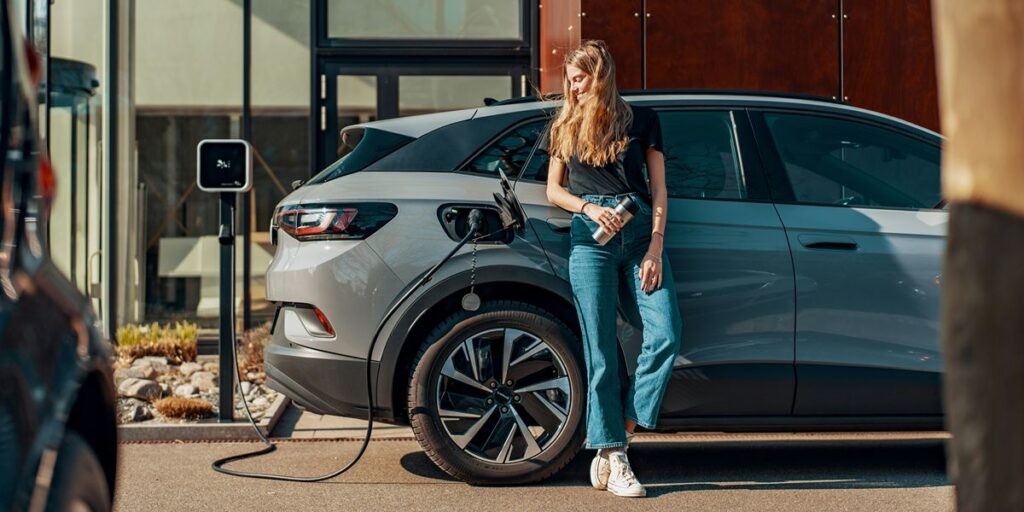
- Looking to lease an electric or low-emission vehicle (maximum tax benefits)
- Managing a fleet or offering company cars to employees
Personal leasing might still make sense if:
- You’re not VAT-registered
- You’re an employee without access to salary sacrifice schemes
- You want absolute simplicity without any tax considerations
But for most business owners, freelancers, and company directors, business leasing is the clear winner in terms of cost.
Business Leasing Wins, Every Single Time
Business car leasing is cheaper than personal leasing because of the tax advantages: VAT reclaim, corporation tax relief, and exceptionally low BiK rates for electric vehicles. When you add in better cash flow management and all-inclusive packages, the financial case becomes overwhelming.
If you’re running a business and need a vehicle, leasing through your company isn’t just cheaper – it’s the smart move. And if you’re an employee, it’s worth checking whether your employer offers salary sacrifice schemes. The savings can be substantial, and you’ll be driving a brand-new car without the financial burden of ownership.
The numbers don’t lie: when it comes to getting behind the wheel of a new vehicle, business leasing wins on price, every single time.
Related read: How Does Business Car Leasing Work?