
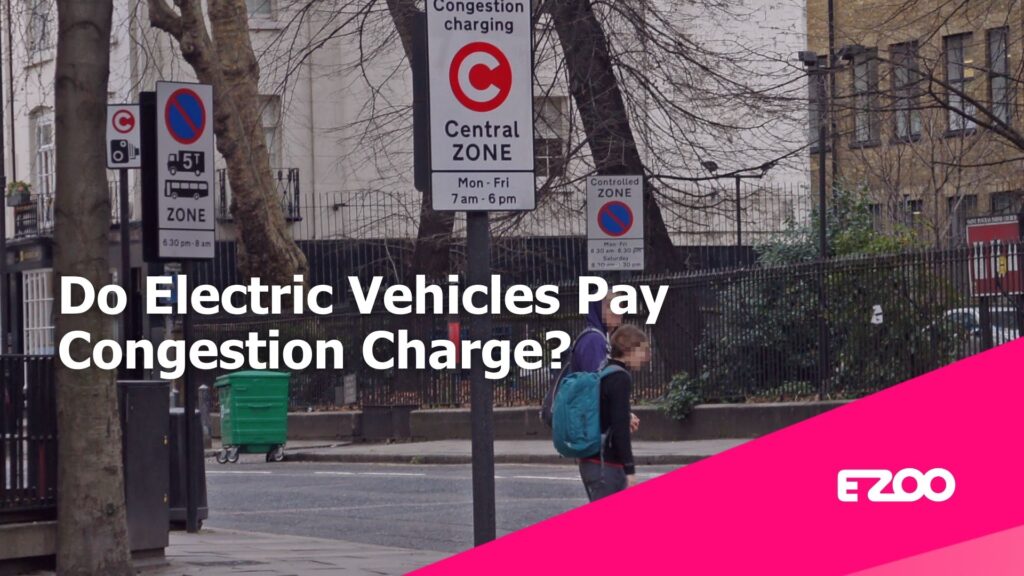
If you’re considering an electric vehicle in London, you’ve probably heard about the congestion charge exemption. It’s been one of those brilliant perks of going electric – avoiding that daily £15 fee whilst helping the environment. But here’s the thing: that benefit is about to change.
What Is the London Congestion Charge?
First introduced in 2003, the London Congestion Charge is a daily fee for driving in central London during operating hours. The zone covers areas like Westminster, Mayfair, Covent Garden, and the City of London – essentially the heart of the capital.
Current operating hours
- Monday to Friday: 7am – 6pm
- Saturday, Sunday and bank holidays: 12pm – 6pm
- No charge between Christmas Day and New Year’s Day
The charge is £15 per day if paid in advance or on the day of travel (rising to £17.50 if paid late). It applies once per day, regardless of how many times you enter or exit the zone.
The whole point? Reduce traffic congestion, improve air quality, and encourage people to use public transport instead of private cars.
What’s Changing?
- Until 25 December 2025: Electric vehicles are exempt from the London Congestion Charge through the Cleaner Vehicle Discount.
- From 25 December 2025 onwards: All electric vehicles will need to pay the congestion charge, just like petrol and diesel cars.
That’s right – the free ride is ending just in time for Christmas. Not exactly the festive gift EV drivers were hoping for!
Why Are Electric Vehicles Losing Their Exemption?
It might seem counterintuitive. After all, aren’t we supposed to be encouraging electric vehicle adoption?
Transport for London’s reasoning is actually quite straightforward: EVs might be cleaner, but they still take up space on the road.
The numbers tell the story. Back in 2019, there were around 20,000 vehicles registered for the Cleaner Vehicle Discount. By 2024, that figure had jumped to over 112,000. More recently, EV registrations in the congestion charge zone have soared from 20,000 in 2019 to over 116,000 in 2025.
When the exemption was introduced, EVs were a tiny fraction of London traffic. Now, they’re everywhere. And whilst zero emissions are brilliant for air quality, they don’t solve the congestion problem – which is what the charge was designed to tackle in the first place.
As Sadiq Khan put it: if every vehicle eventually becomes electric (which is the goal), then nobody would be paying the charge, and it would stop working as a congestion management tool.
The change was actually announced back in 2018, giving drivers nearly eight years’ notice. So whilst it might feel sudden, it’s been on the cards for quite some time.
What About ULEZ?
Here’s the good news: electric vehicles remain completely exempt from the Ultra Low Emission Zone (ULEZ) charge.
ULEZ and the Congestion Charge are different schemes with different purposes:
- Congestion Charge: Reduces traffic volume in central London.
- ULEZ: Improves air quality by charging high-emission vehicles across Greater London.
Because EVs produce zero tailpipe emissions, they’ll continue to be exempt from ULEZ indefinitely. That exemption isn’t going anywhere.
What’s Changing in 2026?
From 2 January 2026, Transport for London is introducing a new tiered discount system alongside an increased daily charge.
New daily charge: £18 (up from £15)
Phase 1 discounts (from 2 January 2026)
- Electric cars (including private hire vehicles): 25% discount = £13.50 per day
- Electric vans, HGVs and quadricycles: 50% discount = £9 per day
Phase 2 discounts (from 4 March 2030)
- Electric cars: 12.5% discount = £15.75 per day
- Electric vans, HGVs and quadricycles: 25% discount = £13.50 per day
Important: These discounts are only available if you register for Auto Pay. Without Auto Pay, you’ll pay the full £18 charge even if you drive an electric vehicle.
To qualify, you’ll need to register your vehicle with TfL, provide proof it’s fully electric, and set up Auto Pay so the charge is automatically deducted.
Does This Make EVs Less Attractive?
Let’s be honest – losing the congestion charge exemption is a blow, especially for people who regularly drive into central London for work.
If you’re commuting into the zone five days a week, that’s roughly £3,510 per year at the new £13.50 discounted rate (assuming you register for Auto Pay). Without Auto Pay, you’d be paying the full £18 rate, which works out at around £4,680 per year. That’s a high extra cost either way.
EVS Are Still Cheaper to Run
Electric vehicles are still massively cheaper to run overall. Even with the congestion charge, EVs offer:
- Significantly lower fuel costs (electricity vs. petrol)
- Minimal servicing and maintenance
- Zero road tax
- ULEZ exemption
- Incredibly low Benefit-in-Kind tax
If you’re accessing an EV through salary sacrifice schemes, the savings become even more compelling. Electric cars through salary sacrifice can save employees 30-60% compared to buying or traditional leasing, with everything from insurance to maintenance bundled into one monthly payment taken from your gross salary before tax.
When you add it all up, even with the congestion charge, driving electric is still considerably cheaper than running a petrol or diesel car – especially for those who benefit from salary sacrifice schemes.
What Should You Do?
If you’re already driving an EV and regularly use the congestion charge zone, the key actions are:
- Budget accordingly: Factor in the additional cost from 25 December 2025.
- Register for Auto Pay immediately: This is essential to get the 25% discount from January 2026 onwards. Without it, you’ll pay the full £18.
- Consider your routes: Could you park outside the zone and use public transport for the final leg?
For residents within the zone
If you’re already registered for the Residents’ Discount before 1 March 2027, you’ll keep your 90% discount regardless of what vehicle you drive. New applicants after that date will only get the 90% discount if they’re driving an EV.
If you’re considering switching to electric, don’t let this change put you off. The overall cost savings of EVs – particularly through salary sacrifice – still far outweigh the congestion charge for most drivers. Plus, you’re contributing to cleaner air across London, even if you’re now paying for the privilege of driving in the centre.