
If you’re considering a company car – or you’ve just been offered one – you’ve probably come across the term “Benefit in Kind” or “BiK tax”. It sounds complicated, but it’s actually quite straightforward once you understand the basics.
The Simple Explanation
Benefit in Kind is essentially a tax on non-cash perks your employer provides. If your company gives you something valuable beyond your salary – like a car, private medical insurance, or gym membership – HMRC considers this part of your overall compensation package and taxes it accordingly.
For company cars, BiK is the tax you pay for having access to a vehicle you can use for personal journeys, including your daily commute. It’s sometimes called “company car tax”, and it’s been around for decades as a way to ensure employees pay tax on the full value of their employment benefits.
How Is BiK Calculated?
BiK tax isn’t random – it follows a specific formula based on three key factors:
1. The car’s P11D value: This is the list price of the car when new, including VAT, delivery charges, and any optional extras fitted at the factory. Think of it as the official taxable value of the vehicle.
2. The car’s CO₂ emissions: This determines the BiK percentage rate. Lower emissions mean lower BiK rates. Electric vehicles have zero tailpipe emissions, which is why they attract the lowest BiK rates available.
3. Your income tax band: The final amount you pay depends on whether you’re a basic rate (20%), higher rate (40%), or additional rate (45%) taxpayer.
The formula is: P11D value × BiK percentage × Your income tax rate = Annual BiK tax. Divide by 12 to get your monthly amount.

Why Are Electric Vehicles So Tax-Efficient?
The government deliberately set ultra-low BiK rates for electric vehicles to encourage adoption and support the UK’s net-zero targets. Because EVs produce zero tailpipe emissions, they sit in the lowest possible BiK band.
Current and future EV BiK rates
- 2025/26: 3%
- 2026/27: 4%
- 2027/28: 5%
- 2028/29: 7%
- 2029/30: 9%
Even when the rate reaches 9% in 2029/30, it will still be roughly one-third of what you’d pay for an equivalent petrol or diesel car. The tax advantage is substantial and long-lasting.
BiK and Salary Sacrifice
Here’s where things get interesting. If you’re getting your electric car through a salary sacrifice scheme, BiK still applies – but the overall savings become even more impressive.
With salary sacrifice, you exchange part of your gross salary (before tax) for the car. This reduces your taxable income, so you save on both income tax and National Insurance. You then pay BiK tax on top, but because EV BiK rates are so low, the combined effect still delivers massive savings.
What’s Included in BiK?
BiK tax only applies to the car itself. If your company also provides fuel for personal use, there’s a separate fuel benefit charge (though this rarely applies to electric vehicles in practice).
Importantly, several things are not subject to BiK:
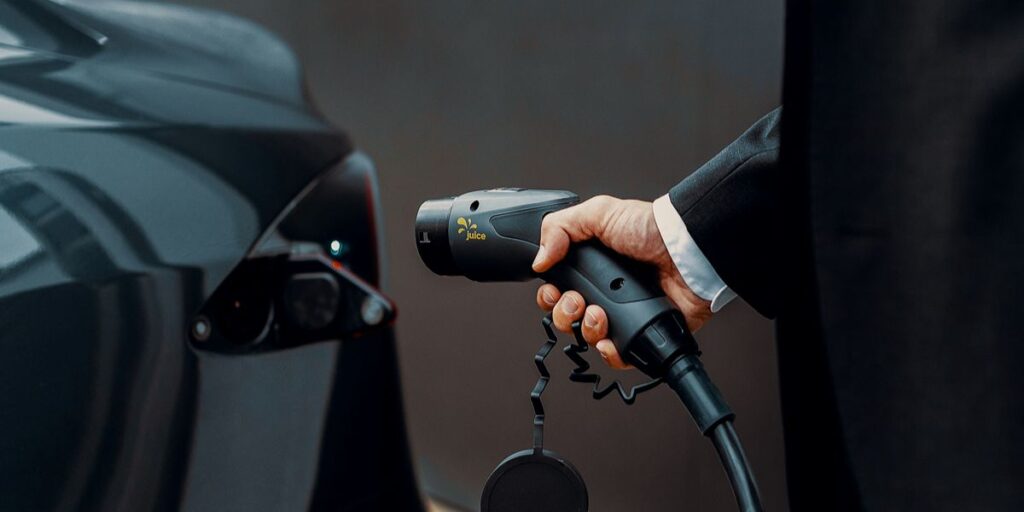
- Workplace charging (completely tax-free)
- Business mileage (reimbursed separately)
- Home charging costs if you keep receipts and claim back business use
This makes electric vehicles even more attractive, as you can charge for free at work without any tax implications.
Does Everyone Pay BiK?
Almost everyone with a company car pays BiK if they can use it for personal journeys. The only exceptions are:
- Pool cars: Vehicles shared between multiple employees, kept at work overnight and at weekends, with no private use allowed. These are BiK-exempt.
- Business-only use: If you genuinely never use the car for personal journeys (including commuting), you won’t pay BiK. But HMRC is strict about this – if you drive it home even once, it counts as personal use.
For most people with company cars, BiK is unavoidable. But with electric vehicles, it’s also minimal.
How Is BiK Paid?
BiK is deducted directly from your salary through PAYE (Pay As You Earn), just like income tax. Your employer calculates the amount and takes it from your monthly pay, so you don’t need to do anything.
Each year, your employer reports the benefit on your P11D form, which HMRC uses to verify that the correct amount of tax has been collected.
Final Notes
Benefit in Kind might sound like an extra tax burden, but it’s actually a fair system that ensures everyone pays tax on their total compensation – not just their cash salary.
For electric vehicle drivers in 2026, BiK rates remain incredibly low. At 4% for the current tax year, you’re paying a fraction of what petrol or diesel company car drivers face. Even as rates gradually increase over the next few years, EVs will remain the most tax-efficient company car choice by a considerable margin.